Call:630.953.4100  |  Email: helpme@mechprod.com

Advanced Design   -   Legendary Performance   -   Superior Circuit Protection   -   Worldwide   -   Count On It

Bi-Metal Snap Thermal Circuit Breakers

The theory of snap-action bi-metal elements is a special application of the more general theory of elastic stability of flexible structures.   Many of the principles outlined here are based on Mechanical Products’ published work, The Theory and Practice of Overcurrent Protection (1987). In 1744, in one of the first mathematical discussions of the theory of elastic stability, Euler showed that column structures under axial compressive loading were subject to failure by lateral buckling at certain critical values of the axial load.  In essence, this same theory applies to snap bi-metal elements.

Consider the pre-curved bi-metal blade structure shown on edge in Figure 3.20. describe the image
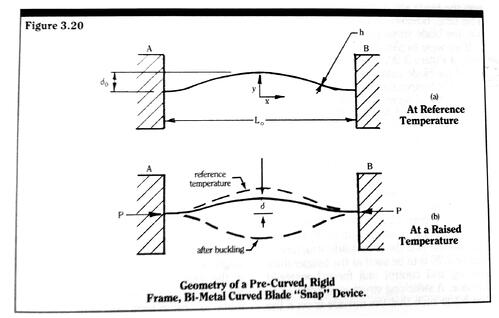
This pre-curved blade has thickness h, width b, and a slight reference temperature upward curvature, such that the mid-span y-axis deflection at reference temperature is 0.  The blade is held firm at ends by rigid frame members A and B, restricting any x-axis elongation.  If the higher expansion side of the bi-metal blade is on the inside of the pre-curve, the blade mid-span deflection will tend to diminish as the blade temperature is raised due to the bimetal bending movement.  As the blade’s curvature diminishes as the blade’s temperature is raised, there will develop with the blade a longitudinal compressive force P, since the rigid frame will not allow any extension in its x-axis separation distance L0.   If the pre-curvature is large enough, and the temperature is raised high enough, the blade compressive force P will reach the Euler critical value and the blade will suddenly buckle downward in an attempt to relieve the force, and reach a new post-buckling locus, shown by the dotted line in Figure 3.20b.  This sudden buckling action is the snap we refer to when we describe a bi-metal element as a snap element. Snap-action behavior in bi-metal elements is fundamentally tied to elastic stability and compressive buckling theory (McCleer, 1987). 

As the temperature is raised beyond the buckling temperature, the blade’s downward curvature is simply increased.  There is no further buckling action.  If the temperature of the buckled blade is lowered, however, the downward deflection will diminish, and the compressive force P will start to rise again.  As the temperature is lowered still further, the compressive force P will again reach the Euler critical value, and the blade will suddenly reverse buckle.  This time, however, in the upward direction (i.e. the blade snaps back).

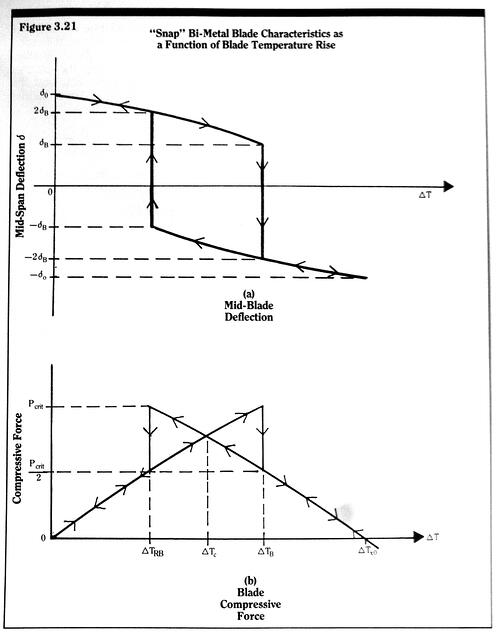
If we were to plot, for the buckling structure of Figure 3.20, the midspan deflection and the blade compressive force P versus the blade temperature rise ΔT, while being careful to observe the direction of ΔT change, we would find that the plots would be similar to those shown in Figure 3.21 (a) and (b).
 describe the image

The direction arrows on the and P trajectories indicate the direction of ΔT travel.  The loops in the and P curves are referred to as hysteresis loops and are commonly found in “thermostat” devices. Hysteresis characteristics are critical to stable switching performance in thermal control and overcurrent protection devices (McCleer, 1987). 

The hysteresis characteristics, like those shown in Figure 3.21, are ideal for an on/off or “bang-bang” control system.  For example, assume that the snap blade structure of Figure 3.20 is to be used as the temperature sensing and control unit for a household furnace.  A switching structure is coupled to the blade such that the furnace is on if the blade is curved upward, and off if the blade has buckled and is curved downward.  It should be clear that the temperature rise at the thermostat location will then oscillate between the buckling rise ΔTB and the reverse buckling rise ΔTRB, and will have an average value of ΔTc – the temperature rise at the center of the hysteresis curve.  The thermostat designer has the job of making the average temperature rise ΔTc adjustable, and the hysteresis temperature width ΔTB-ΔTRB a reasonable value. Proper hysteresis control is essential for predictable device operation and prevention of unstable switching behavior (McCleer, 1987).  Shortly, we shall see how these goals are accomplished.

First, let us reconsider the structure of Figure 3.20.  This structure buckles because it can develop enough longitudinal compressive force P.  Are there other structures, or variations of this structure, which can also allow build up of compressive force to the Euler critical value in a bi-metal element?  The answer, of course, is yes.

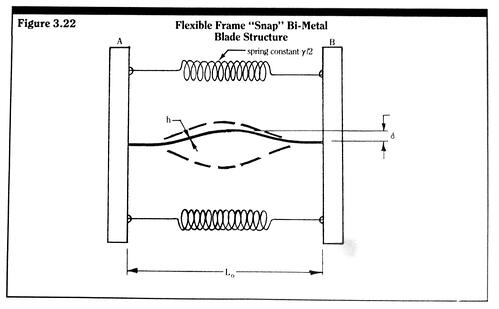
Consider the flexible frame structure shown in Figure 3.22. 
 describe the image

This assembly differs from the fully rigid structure of Figure 3.20 only in the degree of rigidity in which frame members A and B are held at separation distance Lo.  In the flexible frame, any incremental increase in frame separation ΔL from the original length Lo incurs a spring retention force ϒΔL, where ϒ is the effective spring constant of the frame.  This retention force is then the bi-metal blade longitudinal compressive force.

The compression force P for the blade, including the frame extension ΔL, is now given by describe the image
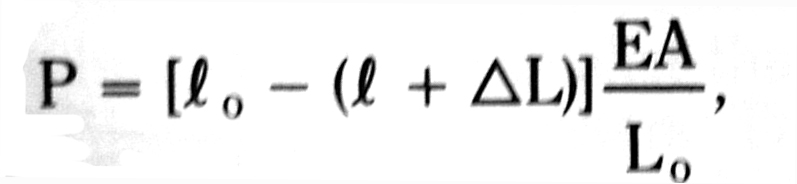
where ℓo is the blade arc length at the reference temperature, ℓ is the blade arc length at temperature rise ΔT, and A = bh is the cross-sectional area of the blade.  Since P = ϒΔL, we can factor out the frame extension term and form describe the image
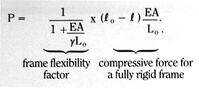
Note that the frame flexibility factor, which we will give the symbol q, is always less than or equal to unity.  It is equal to unity for a fully rigid frame.  Thus, if the frame is not too flexible, there is no basic difference between operation of a fully rigid frame and a flexible frame blade buckling structure.   Frame rigidity and compressive force development are key design variables in snap-action thermal device performance (McCleer, 1987). Though, for an equal change in blade arc length with temperature rise, the flexible frame compressive force P will not be as great as that for a rigid frame.

Let us assume that we wish to use a particular bi-metal material in a snap blade design.  Let the material thickness be 0.008 in., and the reference temperature frame separation Lo be 1.0 in.  In a snap blade design, the hysteresis center temperature rise ΔTc and the hysteresis width temperature difference are to be pre-specified.  Let these quantities by 100o F each. 
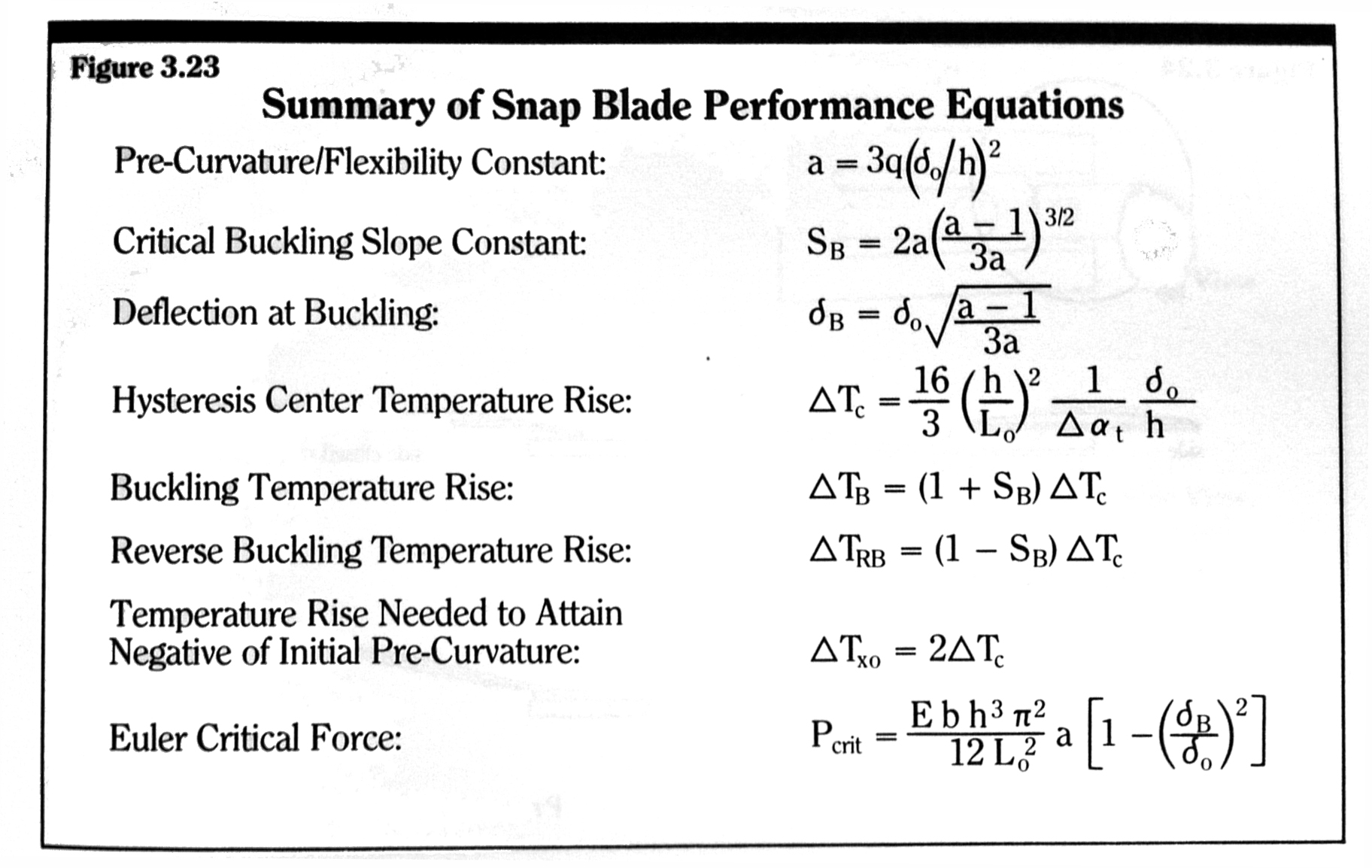
describe the image

Now, using the material parameters given in Table 3.1, and the equations given in Figure3.23,

we have  describe the image
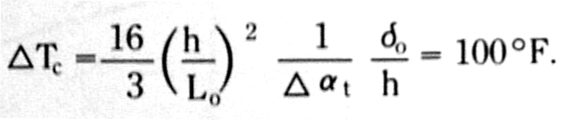
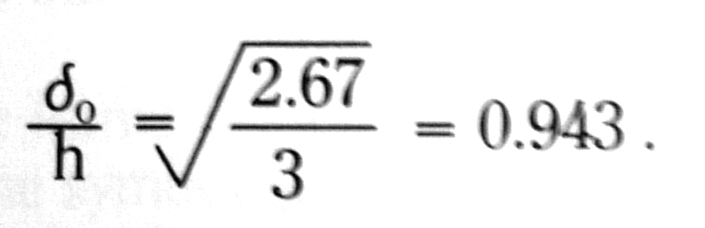
So, that the reference temperature mid-span deflection, due to pre-curvature, must be
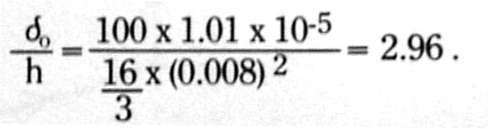
 describe the image

Note that once the choice of material and the reference temperature frame separation has been made, the hysteresis center temperature depends solely on the amount of pre-curvature.  Now, since describe the image
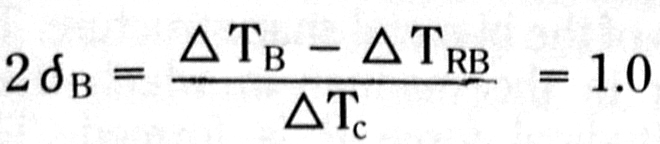
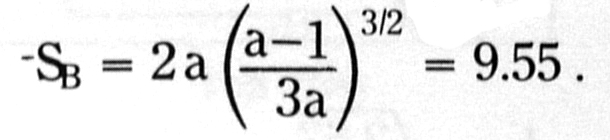
the critical buckling slope SB is equal to 0.5.  From Figure 3.23, we then have describe the image
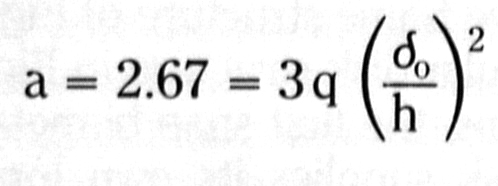
so that the required frame flexibility factor is describe the image
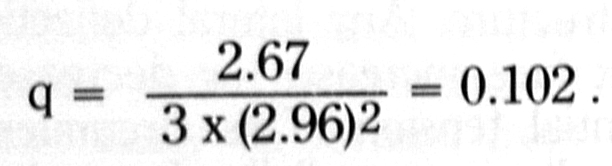
If the frame in the above example was rigid rather than flexible, the hysteresis width temperature difference could not be pre-specified.  Once the required pre-curvature deflection όo has been determined for a rigid frame, we would have an unrealistic result, since the value of Δαt is certainly not valid over such a temperature range.
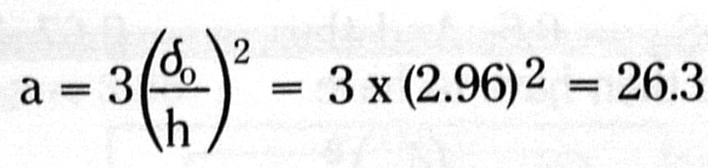
 describe the image

and

 describe the image

And, thus

 describe the image

For a rigid frame, if one wishes to pre-specify both ΔTc and ΔTB – ΔTRB, the reference temperature frame separation Lo must also become a variable.  If we stick to specified hysteresis temperature width and hysteresis center temperature, we must have SB = 0.5.  And thus, a = 2.67.  We would then have to have describe the image
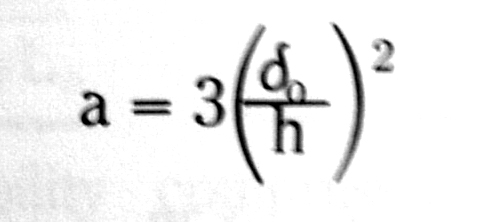
Or describe the image

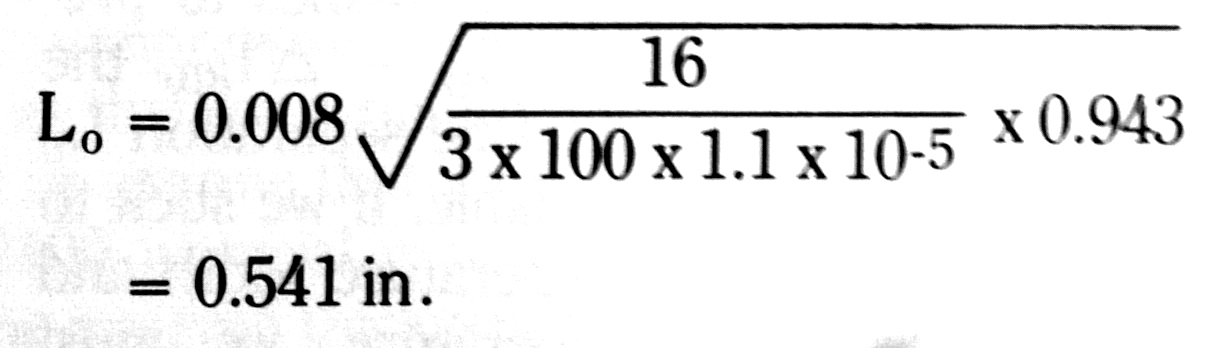
The frame separation can then be solved for as
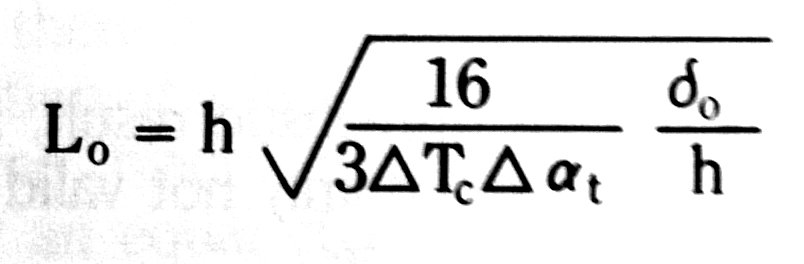
 describe the image

Or

 describe the image

There are several practical implementations of the bi-metal snap structure.  They all differ in the manner in which the blade longitudinal force P is formed.  They all operate, however, by principles similar to those we have developed for the simple compressive frame structure of Figure 3.22. Although implementations vary, the underlying principles of thermal expansion, compressive loading, and elastic instability remain consistent across snap-action device designs (McCleer, 1987). 

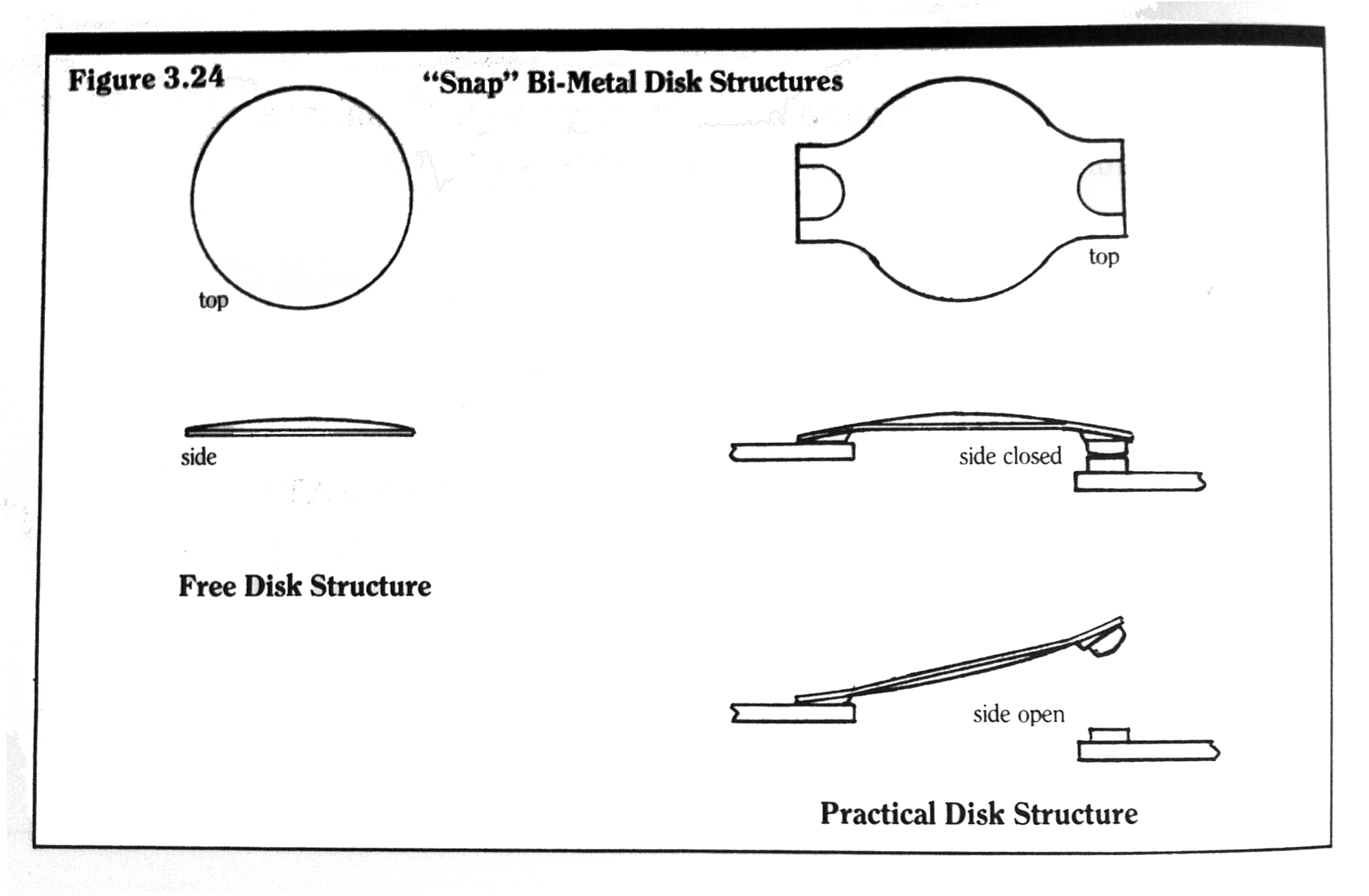
The circular disk structure in Figure 3.24 was, perhaps, the first snap bi-metal device.
 describe the image

A snap disk supplies its own longitudinal compressive force P due to its circular symmetric structure.   Snap-disc structures are widely used in thermal switching applications due to their compact geometry and repeatable snap characteristics (McCleer, 1987).  Any lateral deflection in that disk face increases or decreases circumferential tension.  This circumferential force results in a radially directed force, which can induce lateral buckling, just as in the simple blade structure.  A complete analysis of the stability of an isolated bi-metal disk structure has been given by Wittrick et. al.  This theory however, can only be approximately applied to practical disk structures, since real devices support the disk by an arm or frame.  This support destroys the circular symmetry and invalidates the solutions of Wittrick et.al.  Most practical disk devices are designed using the empirical method (i.e. “cut, try and remember”).

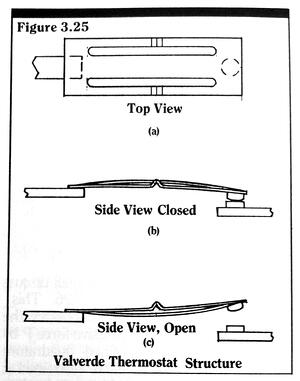
The Valverde thermostat structure is a flexible frame blade device which supplies its own longitudinal compressive force P by means of an ingenuous crimped outer frame.  As shown in Figure 3.25, the bi-metal blade is composed of three parallel sub-blades, joined at the ends. 
 describe the image

The structure can easily be formed from a single blade by punching two longitudinal slits, symmetric about the central sub-blade (see Figure 3.25a).  A length shortening crimp is made in the outer two sub-blades which pre-curves the center sub-blade and forms the compressive frame.  Since the structure supplies its own compressive frame, it need only be supported at one end, enabling the entire device to act as a snapping contact arm (see Figure 3.25c).   Any decrease in the center blade deflection, due to bi-metallic thermo-action, increases the longitudinal compression of the center blade.  At a sufficient level of center blade compression, the entire structure snaps to position of opposite curvature.  Since the crimped outer blades also experience lateral thermo-deflection, device analysis for this structure is somewhat more complicated than that for the simple, single blade, compressive frame structure of Figure 3.22.

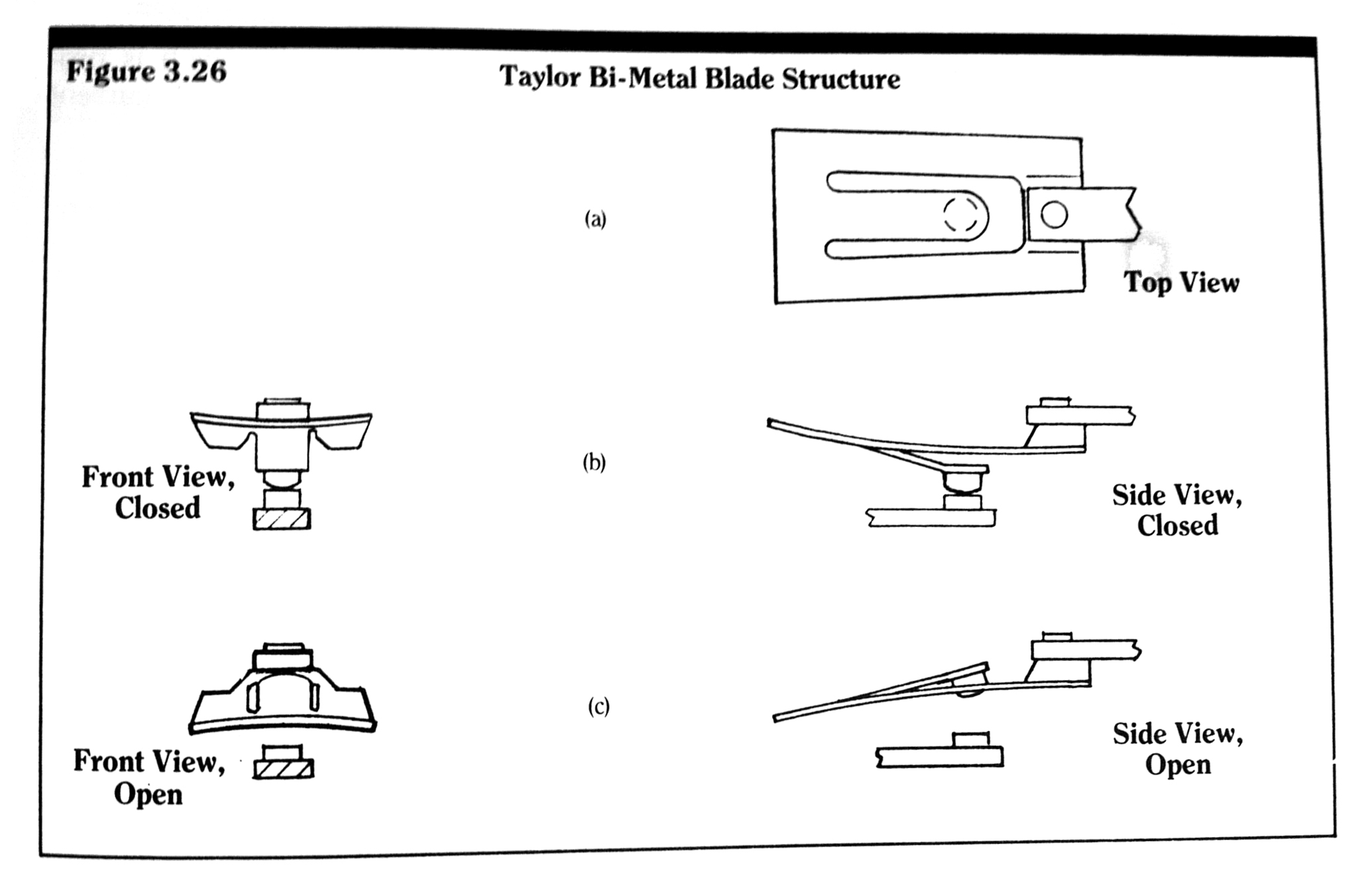
The final snap structure we shall discuss is the Taylor blade, Figure 3.26.
 describe the image

This device, like the snap disc, develops the needed longitudinal compressive force P by means of blade self-confined quadrature forces.  The structure is held or restrained at one end only.  The free end is pre-curved, in a direction perpendicular to the blade length, such that the center blade – the contact blade – pushes a stationary fixed contact with a positive contact make force.  As the blade temperature is raised, the bi-metallic thermo-deflection increases this contact force.  Compressive buckling force in the longitudinal direction (longitudinal to the blade pre-curvature, but perpendicular to the blade length) is supplied by the blade itself.  Much like the disk structure, any decrease in lateral deflection at the free end is countered by restraint due to the anchored outer legs.  At the critical, or buckling temperature, the free end snaps to an upwardly curved position (See Figure 3.26c), and the center contact blade rapidly moves away from the fixed center contact.

The Valverde and the Taylor blade structure discussed above are near ideal overcurrent switching structures, since the contact mechanical “make” force increases as the operating or switching temperature is approached.  This characteristic is quite important since the making force is countered by an electromagnetic breaking force, which is proportional to the square of the current through the device contacts. Understanding the interaction between thermal, mechanical, and electromagnetic forces is fundamental to reliable overcurrent protection device design (McCleer, 1987). 

Reference:
McCleer, Patrick J., Ph.D., P.E. The Theory and Practice of Overcurrent Protection. Chelsea, MI: BookCrafters, Inc., 1987. 
Tags: Snap Blade, Bi-Metal, Bi-Metal Disk, Snap Action Circuit Breaker

Transient Currents in DC and Single-Phase AC Inductive Circuits

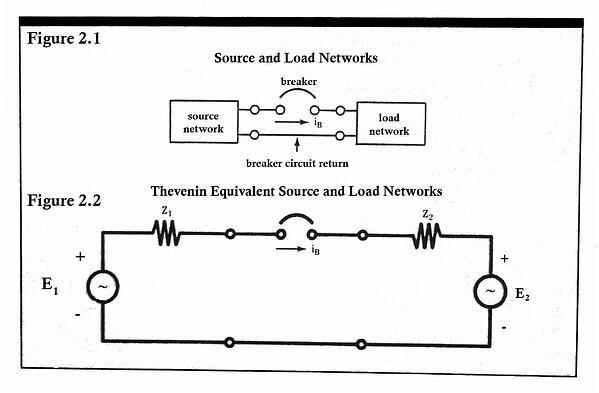
Our concern, here, is overcurrent protection, so we will restrict our attention to one particular location within a circuit, the location, or potential location of an interruptive device.  We arbitrarily divide the total circuit into two sections:   a delivery, or source, electrical network; and a load electrical network (Figure 2.1).  These two networks are connected by two current paths, one of which contains the interruptive device. 

Many of the principles outlined here are based on Mechanical Products’ published work, The Theory and Practice of Overcurrent Protection (1987).  

If both the source network and the load network are linear – a common approximation which is entirely adequate for fault transient calculations – we can, by Thevenin’s theorem (2.1), replace each network by an equivalent source voltage, E, and equivalent network impedance, Z.  The equivalent source voltage for each network is the voltage which would be measured at the network terminals under open circuit (no load) conditions.  The equivalent network impedance is a mathematical description of the combination of resistances, capacitances and inductances that would be measured at the open circuit network terminals. 

This type of system modeling approach is foundational to circuit protection analysis and transient behavior evaluation (McCleer, 1987).  

The equivalent Thevenin networks for the source and load networks are shown in Figure 2.2. describe the image


VIEW PRODUCT CATALOG


 The voltages, E1 and E2, represent the equivalent voltage sources for the source network and load network, respectively.  The source network voltage, E1, represents all the combined voltage generators within the source network.  For Example, if the source network is a feed from an electric utility network, then E1 represents the thousands of generators connected to the utility network, as measured under open circuit conditions at the source network terminals.  But, if the source network is an equivalent for an aircraft 28 volt DC electrical network, E1 represents the rectified alternator output, as measured under open circuit conditions at the source network terminals. 

The load network voltage source, E2, represents all of the combined voltage generators within the load network.  Many times there are no voltage sources within the load network, so E2 is zero.  But, if the load network contains a source, such as the electromotive force (emf) in the windings of a motor, E2 represents the combined total load network voltage, as measured under open circuit conditions at the load network terminals.

The network impedance elements, Z1 and Z2, represent equivalent impedances for the source and load networks, respectively.  The impedance of the interrupting device itself can be arbitrarily lumped in with either the source or the load impedance, Z1 or Z2.

If the source network is an equivalent for a 120 volt wall outlet, then Z1 represents the combined impedances of the thousands of transmission lines, transformers and generator windings which make up the feeding utility network; and the impedances of the local wiring network which connects the outlet.  If the source network is an equivalent for an aircraft network then Z1 represents only the interior wiring within the airplane and the internal impedances of the alternator, as measured at the network terminals.

In a practical sense, the dominant contributors to Z1 in a largesource network are only those network elements which are physically close to the source network terminals.  In a large factory electrical network, the dominant terms in Z1 are the impedances of the wires which connect the source network terminals to the nearest substation transformer, and the impedance of the nearest substation transformer windings.  In smaller networks, such as an automotive network, all impedance terms must be accounted for in Z1, since they all make significant contributions.

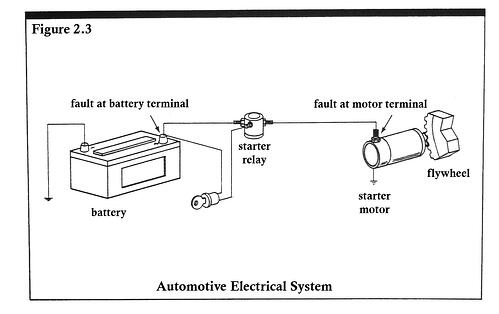
For example, in the simple automotive network shown in Figure 2.3, the internal resistance of the twelve volt automobile battery limits the initial short circuit current at the battery’s terminals to 2000 amps.  But, if the short is at the terminals of the starter motor, the initial short circuit current would be only 1500 amps.  Clearly the additional resistance of the wiring from the battery to the starter motor is responsible for this reduction in potential short circuit current.  The additional resistance is comparable in value to the internal resistance of the battery. describe the image

VIEW PRODUCT CATALOG


Contrast this case, where the impedances of all network elements are important, to the example of a large factory system.  In a large industrial system, it would make negligible difference to an individual user at a particular work station if one or even ten generators were added to the electric utility system which feeds the factory substation.  The value of a work station’s perceived system impedance, Z1, would not change to any significant degree.

The equivalent load impedance, Z2, represents the load network passive elements, as measured from the load network terminals.  Just as in the case of Z1, only dominant elements need be accounted for when computing system currents. 

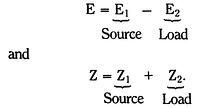
The equivalent network of Figure 2.2 can be simplified even further, if we make the following substitutions: describe the image

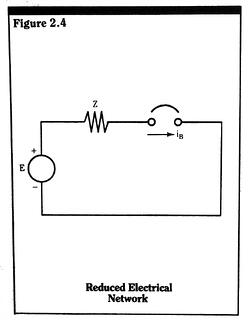
 We then obtain the simplified circuit of Figure 2.4.  Observe that a solution of the electrical network equations for this circuit will give us a solution for the breaker current, ib.  Also observe that it does not matter whether this circuit represents the steady-state operation of our system, or the operation during a system transient due to some sudden change in the system network. describe the image

 We will use the equivalent network of Figure 2.4 to represent the transient operation of an electrical circuit, and from it derive the transient behavior of the breaker current, iB.  Before the transient, assumed to start at time t=0, the breaker may be passing some value of pre-transient current, iB0.  We can use this value as a boundary condition in our transient solution.  We can be assured, however, that iB0 is within the rating of the breaker and/or circuit, since, by definition, we are asserting that only under transient conditions will any rated value of circuit current or voltage be exceeded.

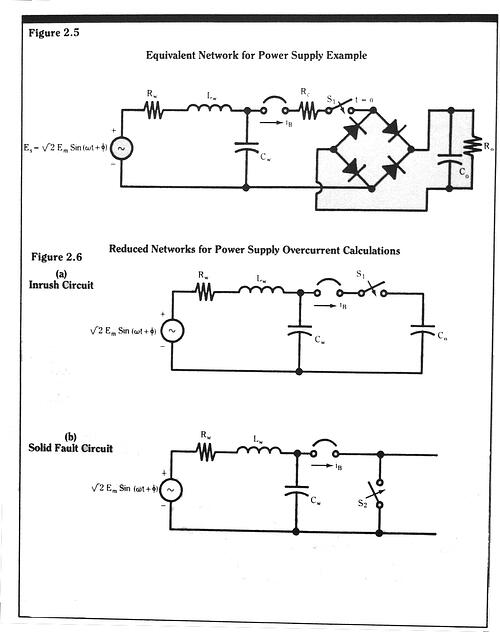
We now give an example of circuit reduction to the form of Figure 2.4.  If we choose a thermal breaker within a plug strip as our study breaker, then the reduced networks – which are equivalent to the single-phase feed from the utility through the plant and laboratory wiring and the power supply load – can be represented as shown in Figure 2.5. describe the image

 The source side inductance LW, and the resistance RW, represent the inductance and resistance of the wiring from the utility substation transformer to the plug strip, and the inductance and resistance of the utility substation transformer itself.  We will also include with LW and RW any inductance and resistance within the breaker mechanism itself.  The source side capacitance, CW, represents a lumped approximation for the distributed capacitance of the supply wiring to ground, and the transformer windings to ground.  The source voltage, ES, is a 60 Hz sinusoidal voltage with RMS (root mean square) magnitude, Em = 120 V, and a phase angle, o.  The power supply load is represented by a wiring resistance, Rc, a series connected on/off switch, S1, a full wave diode rectifier, and a parallel R0, C0 load.

A transient overcurrent could occur any number of ways in this circuit.  Figure 2.6 illustrates two of the most common. A start-up transient is shown in Figure 2.6a.  Here, the on/off switch, S1, is closed at t = 0, and the load capacitor, C0, is assumed to be uncharged before t = 0.  Once C0 is charged, the line current through the breaker settles down to its rated value or below, dependent on the equivalent load resister, R0.  The circuit in Figure 2.6a neglects the rectifying action of the diode bridge and the load resistor, R0, during the start-up transient.  Analysis of this particular circuit would be a conservative method of calculating the start-up transient behavior of iB.  Note that the circuit in Figure 2.6a is of the same form as our general transient equivalent circuit, as given in Figure 2.4.

The second type of transient overcurrent which we will consider for the plug strip and computer power supply circuit is the worst case transient – a permanent short circuit at the input to the computer line cord.  The equivalent circuit for this condition is shown in Figure 2.6b.  Here, the computer load does not enter into the transient calculation, since it is completely shorted out by the equivalent shorting switch, S2, which closes at t = 0.  Also shorted for all practical purposes, and thus irrelevant to the analysis, is the source shunt capacitance, CW.  Note again that the resultant circuit is of the same topology as the general transient circuit of Figure 2.4.

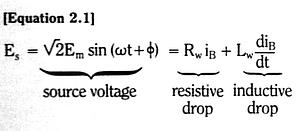
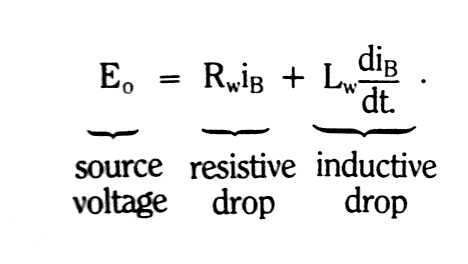
Prior to the short, any prefault line current flowing through the breaker in Figure 2.6b is treated as a t = 0 boundary condition for iB.  The solution for the breaker current is the complete solution, both transient and steady-state, to the differential equation which describes Kirchoff’s voltage law around the Es-LW-Rw loop. Namely:

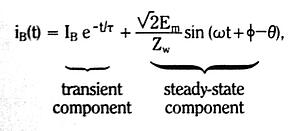
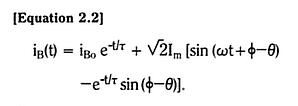
describe the imageWhere w=2f is the system drive radian frequency, with f=60Hz.  The total solution to Equation 2.1, from the elementary theory of differential equations, is describe the image

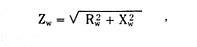
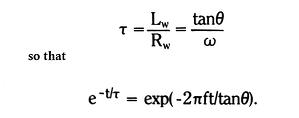
 Where Ƭ is the source inductive time constant, LW/RW; Zw is the inductive impedance at the driving frequency f, describe the image

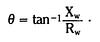
 Xwis the source network inductive reactance, XW=wLW;  and the 0 is the angle by which the steady-state short circuit current lags the drive voltage Es, describe the image

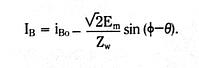
 The constant IB must be determined from the boundary condition for iB.  Since iB=iBo at t = 0, we have describe the image

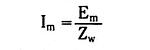
If we define the symmetrical RMS short circuit current magnitude as describe the image

 Then, for the complete time variation of the short circuit breaker current, we have

describe the image

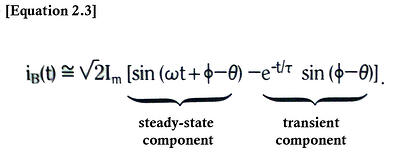
 In nearly all cases, the magnitude of the steady state short circuit current is much greater than the pre-fault current (which is within the rated value of the circuit).  So we can easily neglect the first term in Equation 2.2.  We then have

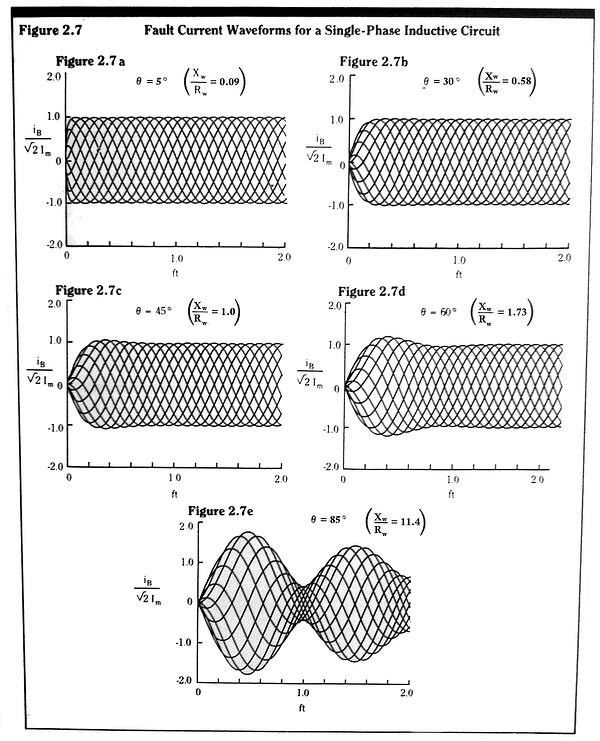
describe the imageEquation 2.3 is plotted in Figures 2.7a through 2.7e, normalized to  , as a function of the product ft.  Note that describe the image

 In Figures 2.7a through 2.7e, the system impedance angle, 0, is specified, varying from 5o to 85o.  Since the fault would be a random event, the switching angle, φ, could be any value over a 360o range.  We show individual iB curves for discrete values of φ, varying from φ=180o to +180o in 30o increments.  These sets of curves for the different values of φ then form waveform envelopes, in which any time variation of iB will lie.

 describe the image

 Of interest, in the results shown in Figures 2.7a through 2.7e, is the transient bulge in the iB envelopes for circuits with largely inductive (0>45o) system impedances.  The more inductive the circuit, the greater the bulge.  This effect is due to the inertial property of the magnetic flux within the system inductance.  Mathematically, it is evidenced in the second term in Equation 2.3.  This term is referred to as the DC offset in the line current.  It decays exponentially, with a time constant equal to LW/RW, and has a maximum initial value when the angular difference between the switching angle, φ, and the system impedance angle, 0, is +/- 90o.

The principal consequence of the DC offset is the potential for fault current levels through the breaker to be almost twice the level of the peak steady-state or sustained fault current level.  This transient amplification effect is a critical consideration in overcurrent protection device selection and rating (McCleer, 1987).  

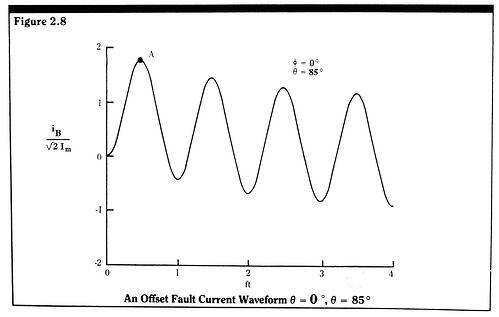
The phenomenon is seen more clearly in Figure 2.8, where four cycles of an almost fully offset current waveform are shown.  As can be seen, the line current at one half cycle into the fault is approximately 1.75 times the peak fault current after the offset transient has died down.

describe the image

 In general, low voltage (240/120V) circuits in industrial and household installations have enough wiring between the circuit and the utility system, so that the system X over R ratio is less than unity (i.e. 0<45o).  Thus, these circuits do not experience offset fault currents. Fault currents, such as those shown in the waveforms of Figure 2.7 and 2.8, must pass non-destructively through the breaker mechanism.  The peak potential current (point A in Figure 2.8) in a fault waveform is termed the peak value of the prospective fault current.  This current value must be less than, or equal to, the interruptive capacity of the breaker (the maximum amount of current a breaker can interrupt, while still able to function if reset). Proper understanding of prospective fault current is fundamental to ensuring safe and reliable protection system performance (McCleer, 1987)  

If the breaker or the fuse is a “current limiting”  type device, then the peak prospective fault current is the peak  fault current that would flow if the limiting device were not present.  The actual peak fault current would be less than the peak prospective fault current, and would depend on the amount of additional circuit impedance that is inserted by an interruptive device mechanism.  Usually, this additional impedance is in the form of an elongated arc, such as that in a fuse or cooled arc chamber.  Thus, the waveforms of Figures 2.7 and 2.8 do not apply to fault currents which are limited by current limiting type breakers.  They apply only to the perspective fault currents for these types of breakers.

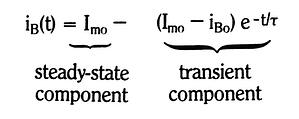
If the generalized circuit of Figure 2.4 represents a DC circuit wherein the source voltage is a simple DC voltage with magnitude E0, the solution for the transient breaker current, iB, is considerably simpler.  For the loop voltage equation, we have describe the image

 The solution for this equation, again from the theory of elementary differential equations, is describe the image

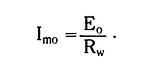
 where, as before, iBo is the prefault (t=0) breaker current and Ƭ is the source system time constant, LW/RW.  The steady state sustained fault current, Imo, is simply the pure resistive current, describe the image

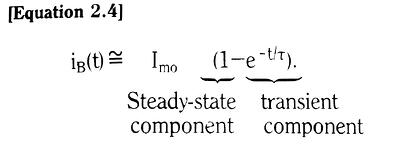
 As in the single-phase AC case, the steady-fault current is generally much larger than the prefault current, iBo, so that we can approximate the transient fault current by

describe the image

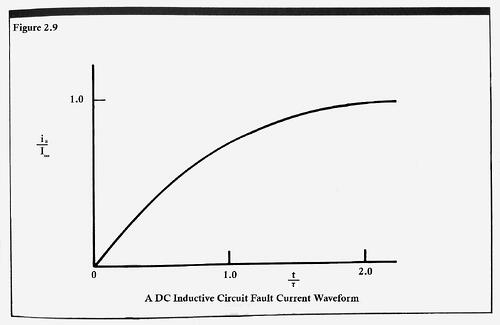
This waveform is shown in Figure 2.9, normalized to Imo.

 describe the image

Note that in this DC case there are no switching angles or timing considerations.  The fault current simply rises exponentially to its steady state value, governed by the system time constant Ƭ.  The peak prospective fault current is the steady-state fault current, Imo, and there are no offset currents that add to this value.  The complication, if there is any in a DC circuit, is that the fault current is truly a unipolar current with no natural current-zero.  A DC breaker must then force a current-zero in order to interrupt the circuit.

Reference:
McCleer, Patrick J., Ph.D., P.E. The Theory and Practice of Overcurrent Protection. Chelsea, MI: BookCrafters, Inc., 1987.  

 

Tags: Thevenin equivalent networks, Circuit Reduction, Offset Currents, Peak fault currents

Mechanical Products Customer Service Press Release

PRESS RELEASE

Mechanical Products (MP) today announced the addition of a new team member as customer advocate and retirement of a valued employee

FOR IMMEDIATE RELEASE
Mechanical Products Company Headquarters June 28, 2017

LOMBARD, IL – Mechanical Products is pleased to announce the addition of Tammy Walsh as our new Customer Advocate. Tammy brings to MP over 20 years of experience in customer service, accounting, project management and administration within industrial manufacturing. Ron Prokup, Vice President and General Manager said, “We are very excited to have Tammy join the MP organization. Her experience and understanding of manufacturing along with her prior work experience will prove a positive transition to MP and the customers we serve”.

With the addition of Tammy as the new Customer Advocate, MP will lose a very tenured, dedicated and responsible individual in Marlene Demstrom who will be retiring later this year. Marlene has helped MP over the last 7+ years in maintaining solid customer and manufacturer representative relationships. During her tenure, MP has grown its sales by over 50% with the addition of new products manufactured in the USA and supporting more than 50 new direct customers. Larry Bajorek, VP Sales said, “We are very sorry to say goodbye to Marlene as she has been a very key contributor to MP’s shift toward growth with new customers and new markets during the past five years. Please help me and the MP family say thank-you to Marlene for her dedicated service to MP during the past 7+ years. We wish her well in her retirement!”.

Finally, with the transition of the customer advocate responsibilities, MP would like to take this opportunity to highlight the new contact information. Please make a note and update your contact information accordingly.

Phone - Customer Advocate ext. 154
Email – customerservice@mechprod.com
please direct all incoming orders to this new email address


About Mechanical Products
MP has been a leading supplier of thermal circuit protection since 1943. MP circuit breakers are used in thousands of critical & commercial applications ranging from construction & electrical generation, marine, medical, military vehicles, power management & battery backup, recreation vehicles, residential & appliance, specialty vehicles and battery chargers. MP has been management owned since 1998 and maintains manufacturing capabilities in the US and overseas with US facilities in Jackson, Michigan and Lombard, Illinois.


For additional information please contact:
Mechanical Products
Ronald Prokup
(630) 953-4100
helpme@mechprod.com
www.mechprod.com


Tags: Circuit Protectors, Overcurrent Protection, Thermal Circuit Breakers, Circuit Breaker, Push to Reset, Transportation, Customer Service

PRODUCT SPOTLIGHT - Series 16

Mechanical Products (MP) Series 16 Circuit Breakers for Overcurrent Protection

MP released an updated version of the Series 16 datasheet.


Series 16 UPDATED datasheet is now available online for download!   

 The datasheet includes:

  • Easier to use part numbering guides
  • Updated regulatory approvals
  • Additional hardware options
  • Detailed physical configurations
Click to visit the Series 16 webpage


The Series 16 has been in production since 1959 and is a proven reliable single-pole circuit breaker designed to protect equipment in the 0.5 to 70 Amp range.  The MP Series 16 is suitable for diverse applications such as Medical Equipment, Uninterruptable Power Systems (UPS), Portable Generators, Welders, Industrial Cleaning Equipment, and Transportation.


 Download Data Sheet


Series 16 Features:

  • UL1500 Ignition Protection
  • UL, cUL, CSA, VDE, CCC
  • ROHS Compliant
  • Choice of snap-in or thread mounting
  • Multiple hardware and boot options
  • Variety of termination options


Click to visit the Series 16 webpage


For questions and application assistance:  Helpme@mechprod.com


Download out product selection guide:

 VIEW PRODUCT CATALOG

Group_of_Breakers_081016.jpg  


About Mechanical Products

MP has been a leading supplier of thermal circuit protection since 1943.  MP circuit breakers are used in thousands of commercial and industrial applications ranging from medical equipment, appliances, lighting, and communication devices, to recreational and off road vehicles/equipment, and electrical protection devices.  MP has been management owned and operated since 1998, is headquartered in Lombard, Illinois and maintains manufacturing capabilities in the US and overseas. 


For additional information please contact:

 Mechanical Products Company                                                                                                                         

(630) 953-4100

helpme@mechprod.com

www.mechprod.com

Lombard, Illinois - June 15, 2017

Tags: Circuit Protectors, Overcurrent Protection, Thermal Circuit Breakers, Circuit Breaker, Push to Reset, Transportation, Short Stop Circuit Breakers, New Products, Shortstop

Mechanical Products Series 17 High Amp Circuit Breakers

PRODUCT SPOTLIGHT:  MP High Amp Circuit Breakers

Often used in automotive auxiliary and accessory circuits for trucks, buses, RVs and marine applications

Now available up to 300 Amps.

Series17WithNuts.jpg

Available in ratings from 25 to 300 Amps, the 17 Series offers a robust thermoplastic material case enclosure, designed with superior moisture sealing, in standard surface and panel mount configurations, along with new Side By Side Surface and Easy Access 90° Panel Mount designs.  Each configuration is available with 1/4” terminal studs, and the surface mount units are also designed with heavy duty 3/8” diameter stainless steel terminal studs.  All are available with stainless steel sems nuts.  The termination stud spacing has been designed to accept standard ring terminal configurations. 

The MP 17 Series is designed as a drop in replacement for existing surface and panel mountable configurations in the market today.  In addition, MP now offers the NEW Side-By-Side Surface Mount terminations and Easy Access 90° Panel Mount configurations to accommodate multiple breaker bus bar installations.  Priced competitively, these high quality breakers, commonly known as high amp circuit breakers or hi amp circuit breakers, are assembled right here in the USA, with minimal lead time required.  

Proudly made in the USA, the Series 17 features:

  • Amperage Ratings from 25 to 300 Amps
  • Trip-free operation
  • Industry standard terminations available in panel and surface mount
  • New "Easy Access" Panel Mount and "Side by Side" Surface Mount configurations available
  • Surface Mount available with 1/4" and New 3/8" stainless steel terminal studs and sems nuts
  • Panel Mount available with 1/4" brass, nickel plated terminal studs and stainless steel sems nuts
  • Auto, manual, or manual push-to-trip options
  • Dustproof and waterproof
  • Visible trip indication
  • Ignition Protected

Series17SurfaceAndPanel21.jpg

The new HIGHER AMP ratings, 225A thru 300A are an excellent complement to MP’s existing transportation product lineup including Series 18, 19, and 32 circuit breakers.  For additional information on these and other high quality MP thermal circuit breakers used for overcurrent protection, visit Mechanical Products at www.mechprod.com.

 The Series 17 circuit breaker is available through MP’s authorized distribution partners.

 Visit the full  Series 17 Product Page


 About Mechanical Products

MP has been a leading supplier of thermal circuit protection since 1943.  MP circuit breakers are used in thousands of commercial and industrial applications ranging from medical equipment, appliances, lighting, and communication devices, to recreational and off road vehicles/equipment, and electrical protection devices.  MP has been management owned and operated since 1998, is headquartered in Lombard, Illinois and maintains manufacturing capabilities in the US and overseas. 


For additional information please contact:

 Mechanical Products Company                                                                                                                         

(630) 953-4100

helpme@mechprod.com

www.mechprod.com

Lombard, Illinois - June 24, 2016

Tags: Circuit Protectors, Overcurrent Protection, Thermal Circuit Breakers, Circuit Breaker, Push to Reset, Marine High Amp circuit Breakers, High Amp circuit Breakers, Transportation, New Products

Mechanical Products ShortStop Thermal Circuit Breakers

New Product Release: MP ShortStop Thermal Circuit Breakers

Mechanical Products (MP) today announced the release of another family of circuit protectors, the Shortstop Series 32.

Available in ratings from 3 to 50 Amps, the NEW Series 32 offers an auto, manual, and modified reset and is a single pole thermal circuit breaker. Short Stop circuit breakers are available in three mounting styles: Standard right angle mounting bracket, parallel mounting bracket, and without a mounting bracket. They have a standard #10-32 threaded termination style. This series can be protected from the elements through the use of the sealing boot available in both red and black.  These boots offer protection against short circuits, as well as from dirt, dust, and splash resistance.

Type I and II models have a rated voltage of 12VDC Max. Type III have a rated voltage of 24VDC Max.   All models have an Interrupt Capacity of 2500A at 12 VDC and a dielectric strength of 1500VAC.  They comply with SAE Standard J553 & J1171, are IP66 rated (with plastic cover), and are ROHS compliant. 

The MP Series 32 Shortstop circuit breakers are designed for various applications: Battery charges, Trucks, Buses, RV’s & Motorhomes, Electric Vehicles, Trolling motors and more!

The NEW Series 32 Shortstop Circuit Breakers are an excellent complement to MP’s existing transportation product lineup including Series 17, 18, & 19 circuit breakers, also designed for harsh environments and available up to 300 Amps.  For additional information on these and other high quality MP thermal circuit breakers used for overcurrent protection, visit Mechanical Products at www.mechprod.com.SS_Breakers.jpgVisit the full  Series 32 Product Page      Download Data Sheet

 The Series 32 Shortstop is available through MP’s authorized distribution partners.


About Mechanical Products

MP has been a leading supplier of thermal circuit protection since 1943.  MP circuit breakers are used in thousands of commercial and industrial applications ranging from medical equipment, appliances, lighting, and communication devices, to recreational and off road vehicles/equipment, and electrical protection devices.  MP has been management owned and operated since 1998, is headquartered in Lombard, Illinois and maintains manufacturing capabilities in the US and overseas. 


For additional information please contact:

 Mechanical Products Company                                                                                                                         

(630) 953-4100

helpme@mechprod.com

www.mechprod.com

Lombard, Illinois - May 31, 2016

Tags: Circuit Protectors, Overcurrent Protection, Thermal Circuit Breakers, Circuit Breaker, Push to Reset, Transportation, Short Stop Circuit Breakers, New Products, Shortstop

It's Official! Mechanical Products is ISO 9001:2008 Certified

As a follow up from our previous blog post, MECHANICAL PRODUCTS COMPANY is pleased to announce that we have been officially awarded an ISO 9001:2008 certification as of August 3rd, 2015.  For a copy of the certification, click here or check out our Certifications page.

ISO9001-2008

Tags: Circuit Breaker, Mechanical Products, ISO

ISO 9001:2008

ISO 9001:2008 CERTIFICATION ACHIEVED FOR MECHANICAL PRODUCTS COMPANY

We are pleased to announce that MECHANICAL PRODUCTS COMAPNY, as of June 24th, 2015, has been recommended for certification to the ISO 9001:2008 standard by TUV SUD America Inc. and will be soon receiving the accredited 3 year certificate. 

Over the course of the past year, senior management has worked with all levels of the organization to create, develop, and strengthen current processes and procedures necessary to achieve the subject certification.  Mechanical Products Company maintains a high level of quality throughout the organization with a top down management approach to quality.  This top down approach to quality allows Mechanical Products Company to develop and improve processes that foster a culture of continuous improvement.  Continuous improvement begins by embracing the elements of ISO 9001:2008.

One of our first steps in working towards the certification was to enhance the involvement of all employees educating them on our “Quality Policy.”  The quality policy was posted throughout the organization and updated on our website.  Quality at Mechanical Products Company is everyone’s responsibility.

Mechanical Products Company’s quality policy is to provide customers with high quality thermal protection devices that are designed and manufactured to offer a competitive advantage with a commitment to meeting requirements, on-time delivery and continuous improvement.

Going forward, Mechanical Products Company is committed to the methods and models of the quality management system described in the ISO 9001:2008 standard.  With a vested interest and commitment of senior management to monitor, measure, and improve quality our current customers, potential customers, and suppliers will experience on-going continuous improvements with the goal of increasing satisfaction and value. 

Learn more about the ISO 9001:2008 standard here.


ISO9001-2008

Mechanical Products Series 19 Heavy Duty Circuit Breakers

3Breakers19
NEW Series 19 HEAVY DUTY circuit breaker
available in 25 to 200 Amp ratings
                                         
with optional LED tripIDTM
The New MP Series 19 line of Circuit Breakers offers end users and designers the LED tripIDTM option in Type I Auto Reset and Type III Manual Reset breakers, with multiple installation option, in a wider amperage rating up to 30VDC, and superior Water Ingress Protection meeting IP67 and IP69K applications.  Specifically designed for Heavy Duty and Industrial Transportation vehicle manufacturer applications that require a robust - harsh environment type of breaker.  For more information on these and other quality circuit protection devices, visit Mechancal Products at www.mechprod.com.

Tags: Overcurrent Protection, Hi-AMP, High Amp, Heavy Duty Circuit Breakers, Circuit Breaker, heavy duty

The Work Truck Show - Visit Mechanical Products, Booth # 5084

WORKTRUCKSHOWBANNER 1

Mechanical Products, a manufacturer of High Quality Thermal Circuit Breakers will be exhibiting at the NTEA Work Truck Show, in Indianapolis, Indiana

March 4 through March 6, 2015

Visit us in Booth # 5084

See all our NEW Product Introductions

Series 12 - Series 15 - Series 17 Hi-Amp Circuit Breakers

NEW tripIDTM Lighted Hi-Amp Accessory

And Other New Re-Engineered Truck Circuit Protection Products

Mechanical Products Company, 1112 N. Garfield Street, Lombard, Illinois 60148

Phone:  630-953-4100 -- Email:  helpme@mechprod.com

Visit our website at www.mechprod.com

Tags: circuit breakers, Hi-AMP, Push to Trip, High Amp, Ignition Protected, Waterproof Breakers, Thermal Circuit Breakers, Surface Mount Circuit Breakers, Panel Mount Circuit Breakers, Reset Circuit Breakers Push Button Hi Amp, Snap Action Circuit Breaker, Push to Reset, Series 17, Mechanical Products Circuit Breakers, Work Truck Breaker, Snow Plow Circuit Breakers, Work Truck - 2015, Mechanical Products, Work Truck Show, Truck Circuit Breakers, Work Truck Show 2015, Truck Show, High Amp circuit Breakers

Follow us!

Subscribe by Email

Latest Posts